
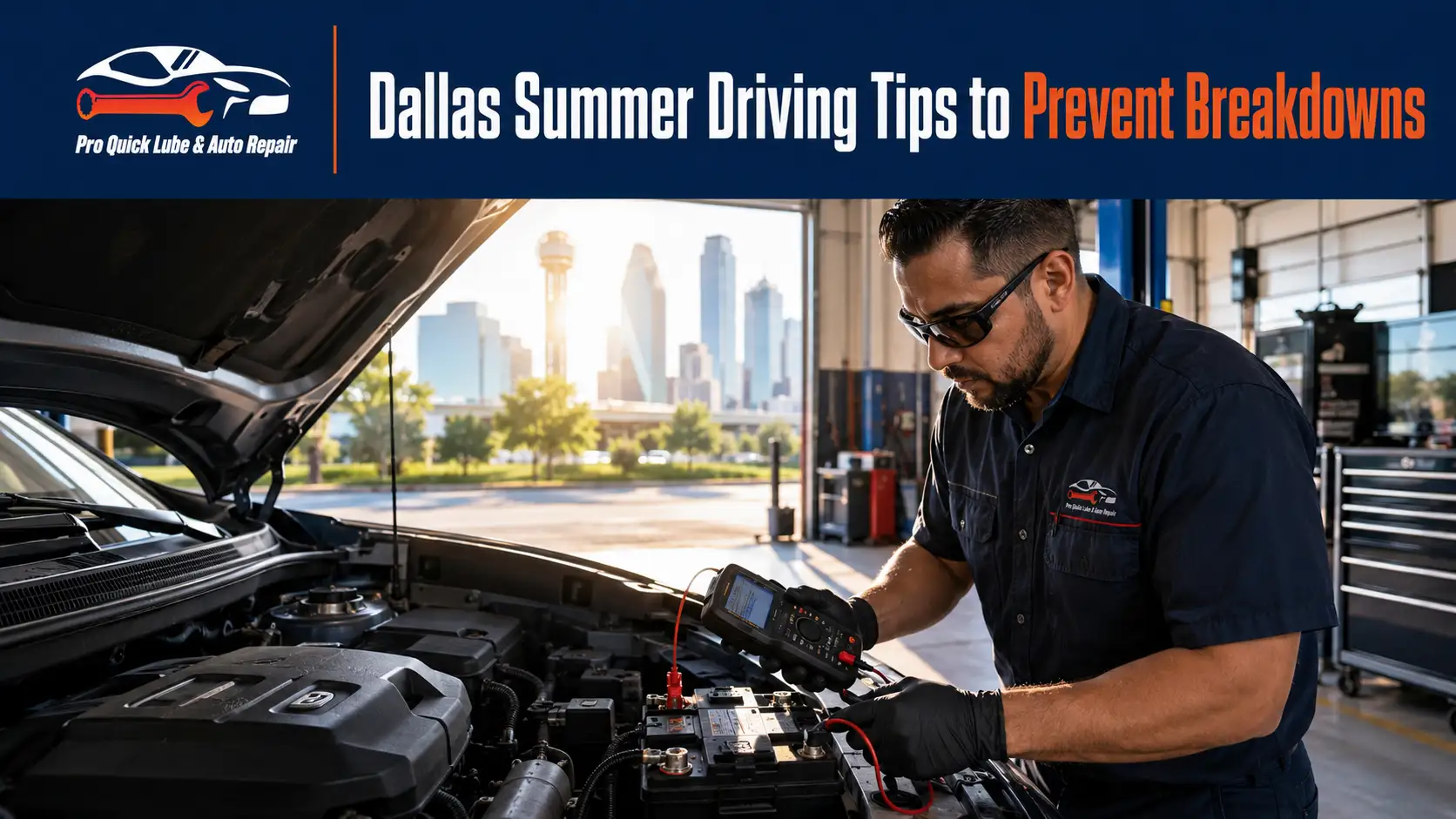
Introduction
Dallas roads absorb heat all day and release it well into the evening. It turns highways and parking lots into a second heat source stacked on top of the sun. Surviving your vehicle in such hotter surroundings without auto maintenance Dallas is almost impossible. It is because engine bays run hotter, rubber components age faster.
The fluids break down sooner than manufacturer estimates typically assume. Most roadside breakdowns during a Dallas summer trace back to a handful of components that quietly weaken for weeks before they fail outright. Catching the warning signs early through a proactive inspection prevents mid-run breakdowns. This guide provides car care Dallas tips for maintaining your vehicle during the intense summer in Dallas.
Battery Failure

Heat Accelerates Battery Wear
Cold weather gets blamed for dead batteries. But the main cause is the heat, which does the real damage. High under-hood temperatures accelerate chemical reactions inside a battery. It causes internal components to corrode and fluid to evaporate faster. A battery rated high in a temperate region often loses meaningful capacity in summers in Dallas.
Warning Signs Of Failure
A slower crank when starting the engine is typically the first hint that a battery is losing strength. Dimming headlights at idle and sluggish accessories are additional clues. None of these symptoms guarantees an imminent failure on their own. But two or more appearing together are worth acting on and immediately taking vehicle maintenance Dallas services.
Cooling System and Overheating
Coolant Level And Mix
It pulls heat away from the engine and prevents the fluid in the system from boiling. A proper mix of coolant and water protects both against overheating and internal corrosion. Low levels reduce the system’s capacity to manage heat exactly when Dallas temperatures demand the most from it.
Failing Cooling System Signs
A temperature gauge that drifts toward the red zone during high traffic is the most common sign. A sweet smell inside the cabin or visible steam from under the hood also reflects the same. Owners should avoid waiting for a full boil-over, which risks warping the cylinder head. They should take summer car maintenance services to keep their vehicle functioning smoothly.
Tire Safety
Hot Pavement And Pressure
Air expands as temperature rises. Asphalt that reaches one hundred forty degrees on a summer afternoon pushes tyre pressure well above the recommended figure. Overinflated tyres from heat, combined with an underinflated baseline from a missed check earlier in the season, create uneven and unpredictable handling.
Blowout Risk Factors
Underinflation is the leading contributor to blowouts because it lets a tyre flex more than it’s designed to. It generates internal heat that weakens the rubber structure. Worn tread reduces the tyre’s ability to shed heat efficiently, and an overloaded vehicle multiplies the stress on every tyre simultaneously. These factors boost each other on long highway stretches at sustained speed.
Fluid Levels Beyond Coolant
Engine Oil
Oil lubricates and cools moving engine parts simultaneously. High ambient temperatures thin it out faster, reducing its protective film. Checking the level and colour regularly keeps the engine protected during the hottest stretch of the year.
Brake Fluid
It absorbs moisture, which lowers its boiling point. It also increases the risk of brake fade during hard or repeated stops in heavy Dallas traffic. Fluid that looks dark or cloudy has likely degraded and should be flushed.
Transmission Fluid
Automatic transmissions generate significant heat under load. Fluid that smells burnt or has turned dark brown instead of its usual reddish tint signals internal wear. A fluid service can address it before it leads to shifting problems.
Power Steering Fluid
A degraded power steering fluid makes the wheel feel stiffer or noisier during turns. This effect is often more noticeable in slow parking-lot manoeuvres. An auto maintenance Dallas quick level check service during any summer inspection prevents a gradual loss of steering assist.
Belts and Hoses
Rubber Degradation In Heat
Rubber compounds break down faster under sustained high temperatures. They lose the flexibility that lets belts and hoses handle constant engine vibration and pressure. A component rated to last several years in a mild climate often needs replacement sooner in North Texas.
Cracks And Bulges
A serpentine belt with visible cracking across its ribbed surface is closer to failure than it appears. Its outer wear often shows before a snap occurs without warning. Hoses that bulge at any point along their length can rupture under normal operating pressure.
Glazing And Soft Spots
A belt with a shiny, glazed surface has hardened and lost grip. It can cause slipping noises and also reduce accessory performance. Hoses with soft, mushy spots when squeezed gently have deteriorated internally. In some cases, you can see the outside looks intact, making a visual check alone insufficient.
Air Conditioning System
Increased AC Strain
A Dallas summer asks far more of an air conditioning system than milder climates do. This is because the compressor runs longer to offset consistently high environmental temperatures. That extended duty cycle accelerates wear on multiple components and the compressor itself.
Low Refrigerant Signs
Warm air blowing from the vents is the clearest sign of a disturbed refrigerant system. A hissing sound near the dashboard can indicate a leak at a fitting or hose connection. It must be located and sealed quickly to prevent any further damage.
Failing Compressor Symptoms
A clicking noise when the air conditioner is on often indicates a compressor with worn internal components. Inconsistent cooling that fluctuates between cold and warm air is another indicator. It reflects that the compressor or its clutch assembly needs evaluation.
Pre-Summer Maintenance Checklist
Battery Load Test
Schedule a load test before the season’s first heat wave to catch a weakening battery while there’s still time for a planned replacement.
Cooling System Flush
Verify coolant concentration and condition, and flush the system if it hasn’t been serviced within the manufacturer’s recommended interval.
Fluid Level Review
Check oil, brake fluid, transmission fluid, and power steering fluid together as part of one inspection in auto repair Dallas rather than separate visits.
Belt And Hose Inspection
Have a technician examine every belt and hose for cracking, glazing, and bulging. Also make sure there are no soft spots before extended heat exposure sets in.
Tire Pressure And Tread
Confirm pressure against the manufacturer’s cold-tire specification and inspect tread depth and sidewall condition on all four tyres.
AC Performance Test
Run the air conditioning system through a performance check. Before the peak cooling season begins, you should check refrigerant level and cabin filter condition.
Stay Safe By Scheduling Your Summer Car Check Today
In Dallas summer, every component degrades quietly, without a dramatic warning. To prevent this, car owners should use professional auto maintenance Dallas services from trained technicians. They catch the difference between normal wear and a component approaching failure. So, booking a pre-summer car service Dallas now is the most reliable way to head into the hottest months with confidence. Pro Quick Lube & Auto Repair works through battery, cooling, tyre, fluid, and belt checks in a single visit. They flag anything that needs attention while there’s still time to address it on a normal schedule instead of an emergency one.
FAQs
How do I prevent car breakdowns in summer?
It starts with addressing the components most affected by heat. A pre-season inspection that checks all most-used parts along with fluid levels catches the gradual wear early. It prevents them from leading to sudden roadside failures.
How do I prepare my car for Dallas heat?
You should consider both extreme ambient temperatures and the added heat radiating off pavement. That means verifying coolant strength and testing the battery under load. You also have to check tyre pressure more frequently than in milder climates.
How often should I service my car in summer?
A comprehensive pre-summer inspection covers most seasonal risks. Tyre pressure should be checked biweekly during peak heat. Fluid levels are worth a quick glance monthly given the added strain of high temperatures.
What should I check before a summer road trip?
You need to check tire pressure and tread. Taking professional services for the coolant level and the battery condition can also prove beneficial. Always keep a roadside emergency kit stocked with water and a charged phone as a backup.