
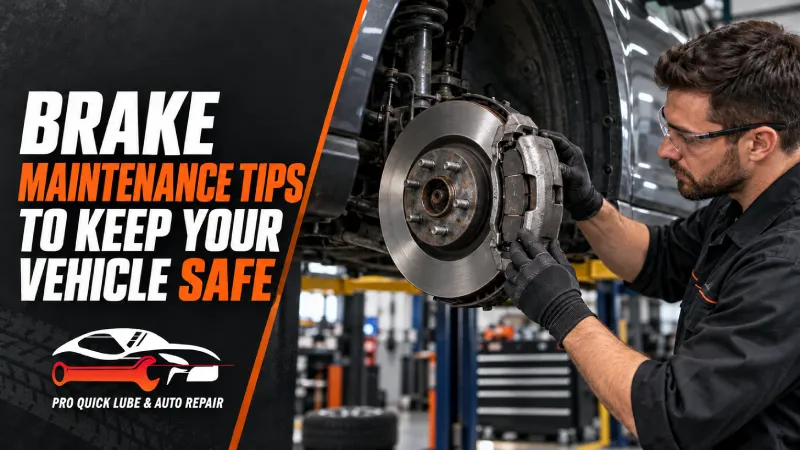
Brakes are the most critical safety feature on any vehicle. They help you slow your vehicle down right when you need to. The parts underneath the car experience immense stress every time you press the pedal. The fluid inside the system gradually absorbs moisture from the air and weakens your stopping power. Healthy brakes are also necessary for your car’s built-in computer safety systems. They help it function properly and keep you stable during emergency stops. That’s why it is crucial for drivers to know about car brake maintenance tips.
A small squeaking sound from your wheels is actually a warning that your brake pads are wearing thin. If you ignore this noise, it quickly turns into a harsh metal grinding that destroys your car’s stopping system. A delay in a simple checkup can also cause internal parts to rust and lock up. This can force your vehicle to pull violently into oncoming traffic at highway speeds. Many people put off this basic service to save money, but thin pads will quickly ruin your brake discs. This turns cheap brake pad maintenance and repair into a massive bill while putting your life and others in serious danger.
Know the Warning Signs
Grinding or Squealing Noises
A high-pitched squeal when you press the brake pedal is often a built-in warning. It originates from a small metal clip designed to scrape against the wheel disc once your pads wear thin. This noise can also happen if intense heat glazes the pad surface into a smooth texture that vibrates loudly when you try to stop. The friction material disappears entirely, resulting in a harsh grinding noise if you ignore the early signs.
Brake Pedal Feels Soft or Sinks
Air bubbles trapped inside your fluid lines will make your brake pedal feel spongy. This happens because air easily squishes under pressure and prevents your brakes from squeezing with full force. This significantly increases the distance it takes to stop your car. If your foot slowly sinks all the way to the floorboard while waiting at a red light, internal seals are failing and letting pressure slip away.
Vehicle Pulling to One Side
This issue can happen during braking if a wheel clamp becomes rusted on its pins. This failure prevents that specific brake from gripping, forcing the functional side to pull the steering wheel as it does all the work alone. A damaged flexible fluid hose can also trap pressure at one wheel, causing that single brake to drag and pull constantly. Similarly, any oil or grease leaking onto your pads will ruin their grip, causing the vehicle to veer toward the dry side.
Dashboard Brake Warning Light
An illuminated dashboard brake light usually means the fluid level inside your reservoir has dropped below a safe line. Many modern cars also use an electronic wire sensor built into the pad. It triggers an instant dashboard alert the moment the friction layer gets too low. If this light appears alongside your traction or anti-lock brake symbols, a computer fault has disabled your automatic stability assists.
Routine Brake Inspections
Recommended Intervals
A complete brake inspection should be scheduled regularly. It helps you to catch normal wear before it turns into severe damage. Drivers who do not travel long distances still need a checkup at least once a year. It is necessary to follow this frequency because cars that sit idle face moisture buildup in the fluid and rust on the wheel discs.
Checking Pads, Rotors, and Fluid
A proper checkup requires evaluating the thickness of your vehicle’s pads to ensure they never drop below a safe thickness. Expert mechanics also examine the metal discs for deep scratches that can cause your brake pedal to shake. Also, the health of your brake fluid must be tested to ensure it has not absorbed too much water.
Professional vs. DIY Checks
Peeking through the wheels with a flashlight is never enough. Professional technicians hoist the vehicle and remove all four wheels to measure every single component precisely with specialized tools. They possess diagnostic equipment to check hidden lines. They also thoroughly test internal system pressure that a basic home garage lacks.
Importance Of Brake Fluid
Absorbs Moisture & Loses Efficiency
Even inside a completely sealed system, water vapor slowly forces its way through microscopic pores in the rubber hoses. As this water mixes with the clean fluid, it lowers the fluid’s ability to handle high temperatures. Under heavy braking, it turns into hot steam bubbles that compress easily when you push the pedal. This compression creates a sudden, highly dangerous loss of stopping power.
Signs of Contaminated Fluid
Fresh fluid gradually breaks down, turning dark brown or completely black. It collects tiny particles of rust and debris from inside the lines. You can physically feel this contamination if your brake pedal requires multiple pumps to slow the car down. This internal moisture can also cause hidden rust along electronic valves. This can eventually break loose, clog safety sensors, and trigger warning lights on your dashboard.
Flush Intervals to Maintain Power
Regular maintenance schedules generally require a complete fluid replacement every two years. This keeps the system clean and safe. Mechanics use specialized testing tools to measure the exact amount of moisture contamination. They recommend an immediate flush if the water content rises too high. Vehicles that face extreme conditions require much faster attention than others. These demanding situations push the system through rapid heat cycles.
Driving Habits That Protect Brakes
Avoid Hard Braking
A heavy stomp down on the pedal causes an instant surge in friction that creates intense thermal shock across the wheel assemblies. This sudden heat spike softens the pad material, and a foot clamped down at a complete stop smears this hot residue unevenly onto the metal discs. These microscopic high spots harden into rough patches that cause an annoying vibration through the pedal during future stops. A smooth approach into your stops lets the heat spread safely. It keeps operating temperatures low and doubles the life of your pads.
Keep a Safe Distance
Drivers who follow too closely are trapped in a stressful confusion. It pushes them to react to every tap of the lead car’s brake lights. This erratic pattern forces your system into unnecessary wear cycles that exhaust your friction pads quickly. A generous cushion of space ahead provides the time to spot traffic changes early and react smoothly. A simple lift of your foot off the gas pedal uses the vehicle’s natural drag to slow you down. This keeps your system cool and bypasses the need to touch the brakes.
Downshift on Slopes
A continuous lean on your brake pedal down a long hill drags the pads against the discs without giving them a chance to cool. This constant friction produces extreme heat that melts the internal binding glue. It releases a hot layer of gas that gets trapped against the wheel. This acts like a slick grease, making the pedal feel solid while the vehicle completely loses its mechanical power to stop. A quick shift into a lower gear forces the transmission to slow the car down naturally. It keeps your physical brakes cool and fully responsive for sudden emergencies.
Cost of Neglect vs Preventive Care
Maintenance Leads to Low Costs
A timely replacement of your worn brake pads is a budget-friendly service that keeps your vehicle driving smoothly. Regular care for your brake fluid similarly protects your car’s complex internal anti-lock systems from developing destructive rust inside the lines. Early detection of minor wear issues during a routine inspection also allows a mechanic to quickly clean and grease sticky wheel parts. This simple, preventative care keeps you from facing sudden, expensive garage bills.
Neglect Leads to Massive Bills
A delay in a basic pad replacement allows the friction material to disappear until the metal backing plate scrapes straight into the wheel disc. This metal-on-metal grinding carves deep grooves into the system. It forces you to pay for expensive new discs instead of a simple pad replacement. Neglected thin pads also force the internal wheel parts to push out past their safe limits. This tears the soft rubber seals and exposes accurately working parts to road dirt and moisture that cause the brakes to lock up.
True Safety Risks
By skipping routine brake care, you severely impact your vehicle’s physical stopping power. Old fluid can boil instantly during a quick stop, leaving you with a soft pedal that takes much longer to halt the car on a fast highway. If a neglected part breaks apart during an emergency, the stopping force becomes completely uneven. This can cause your vehicle to pull sharply or spin out of control. The small amount of money saved by skipping standard maintenance vanishes instantly if you cause a collision. It exposes you to high insurance costs, car damage, and serious injury.
Final Analysis
For proper care of your vehicle, you should strictly follow brake maintenance tips to save lives. Regular checkups do much more than just help you stop quickly. They protect all the connected wheel parts from bending out of shape and keep your car’s main safety computers working perfectly. Early detection of small problems guarantees that your brake pedal will react instantly whenever you face a sudden hazard on the road. If you are looking for timely service from a professional, contact Pro Quick Lube & Auto Repair. They ensure the job is done with the proper software and tools as per your vehicle model. This gives you complete peace of mind that your car is entirely safe to drive.
FAQs
How long do brake pads typically last?
Their lifespan may vary depending on your driving style and vehicle type. Premium pads can last longer because they’re designed to perform well in ideal conditions.
What causes brake pads to wear out faster?
Aggressive driving habits are the main cause of rapid heat buildup. It ultimately forces the pads to wear out quickly.
When should I replace brake pads and rotors?
Replace pads when the friction layer drops below 3mm and rotors if they drop below their safe factory thickness.
How much does professional brake service cost in Dallas, TX?
A standard set of new brake pads generally costs up to $300 per axle, including labor. If neglect has ruined the discs, replacing both the pads and rotors typically costs more. Brake system maintenance usually costs less than repair.